
Raju Bhattarai, Kathmandu
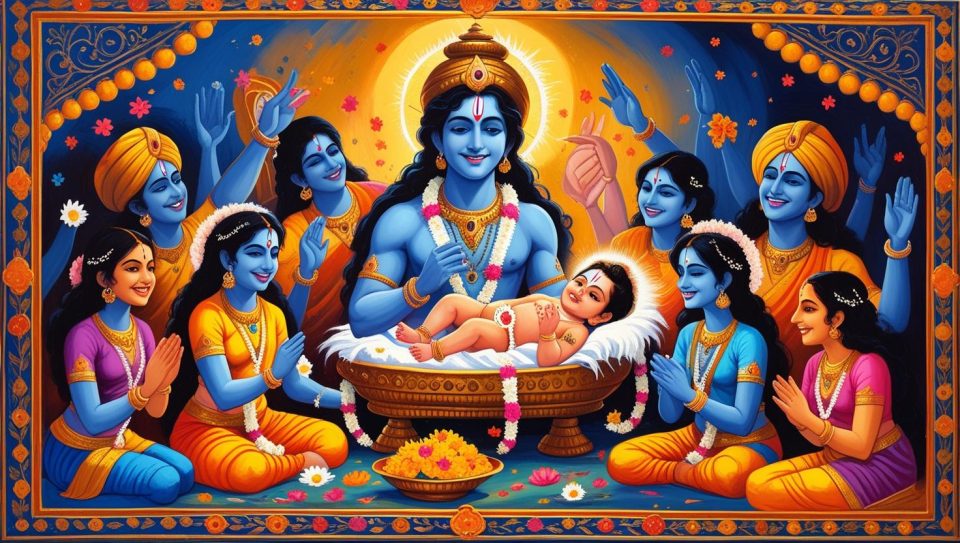
Shree Krishna Janmashtami is one of the most significant festivals in Hindu tradition, celebrated with grandeur across Nepal, India, and the global diaspora. It commemorates the divine birth of Lord Krishna, regarded as the eighth avatar of Lord Vishnu, who descended on earth over 5,000 years ago in Mathura to re-establish dharma and guide humanity.
Historical and Scriptural Background
The origins of Janmashtami are deeply rooted in the Bhagavata Purana, Mahabharata, and Vishnu Purana. According to the scriptures, Krishna was born in Dwapara Yuga during a period of social, political, and moral decline. His parents, Devaki and Vasudeva, were imprisoned by the tyrant King Kansa, who feared the prophecy that Devaki’s eighth son would be his destroyer.
At midnight on the eighth day (Ashtami) of the dark fortnight in the month of Bhadrapada (August–September), Krishna was born under extraordinary cosmic circumstances. Despite being shackled, Vasudeva miraculously carried the newborn Krishna across the Yamuna River to Gokul, where he was raised by Yashoda and Nanda. This divine birth itself symbolizes the triumph of truth over oppression and the promise of hope amidst despair.
Philosophical and Spiritual Relevance
Janmashtami is not merely the celebration of a historical event—it embodies Krishna’s eternal teachings.
The Bhagavad Gita, delivered by Krishna to Arjuna on the battlefield of Kurukshetra, remains one of the most profound spiritual texts in the world. It emphasizes selfless action (Karma Yoga), devotion (Bhakti Yoga), and wisdom (Jnana Yoga) as paths to liberation.
Krishna’s life illustrates the harmony of duty and joy, power and compassion, playfulness and wisdom—qualities that continue to inspire humanity.
His teachings are universal: perform your duty without attachment to results, surrender to the divine with faith, and live a life grounded in dharma.
Rituals and Observances
The observance of Janmashtami varies regionally, yet some rituals remain universal:
Midnight Worship: Devotees fast until midnight, the sacred hour of Krishna’s birth, when prayers, aarti, and chanting of “Hare Krishna” fill temples and homes.
Jhanki & Raas Leela: Artistic depictions and dramatic enactments bring to life Krishna’s childhood mischief, his divine dance with the Gopis, and his heroic acts.
Dahi Handi: Symbolic of Krishna’s playful love for butter, groups form human pyramids to break earthen pots filled with curd and sweets, representing teamwork, joy, and spiritual triumph.
Pilgrimages: In Nepal, thousands gather at Krishna Mandir in Patan Durbar Square, while in India, millions visit Mathura, Vrindavan, and Dwarka, considered sacred abodes of Krishna.
Cultural and Global Dimension
Janmashtami is not confined to South Asia; it has grown into a global spiritual celebration.
In Nepal, Janmashtami holds national importance, with government holidays and large-scale temple gatherings. The Krishna Mandir in Lalitpur, built in 1637 by King Siddhi Narsingh Malla, is a hub of devotion where devotees chant and offer prayers all night.
In India, Vrindavan and Mathura witness unparalleled devotion with processions, Ras Leelas, and temple festivities.
Worldwide Celebrations: The International Society for Krishna Consciousness (ISKCON) has carried the celebration of Janmashtami to every continent, transforming it into a multicultural festival celebrated in cities like London, New York, Melbourne, and Nairobi.
Symbolism of Janmashtami
Each element of Janmashtami holds deep symbolic meaning:
The Midnight Birth → Darkness giving way to divine light.
Breaking Dahi Handi → Breaking the pot of ego to taste the nectar of divine bliss.
The Flute of Krishna → The call of the divine that empties the soul of worldly noise and fills it with love.
Butter and Sweets → The sweetness of devotion that sustains the soul.
Contemporary Relevance
In today’s fast-paced and conflict-ridden world, Krishna’s life and teachings are more relevant than ever.
His philosophy inspires leadership, resilience, and moral courage.
His joyous nature reminds us to balance work and celebration.
His compassion urges us towards environmental care, social harmony, and inner peace.
Conclusion
Shree Krishna Janmashtami is not only a celebration of a divine birth but also an opportunity to renew our commitment to living by Krishna’s eternal wisdom. It bridges history, spirituality, and culture, uniting millions in devotion and joy.
As devotees chant “Hare Krishna, Hare Rama” under the midnight sky, the message resounds across time: truth will always overcome falsehood, love will always triumph over hatred, and light will always conquer darkness.
