1) Quick summary (one paragraph)
Tradition associates the Nepal Sambat, an indigenous Nepalese era, with the year AD 879 and the merchant Sankhadhar Sakhwa (the epoch is commonly given as 20 October 879). In the Kathmandu Valley, it was extensively utilized for governmental, religious, and commercial dating during the Malla period of the Middle Ages. Today, it is primarily used in Newar ritual and celebration. Manuscripts, inscriptions in stone and copper, and numismatic artifacts are examples of historical evidence. The period disappeared from official state use under subsequent centralising regimes, but it was resurrected as a cultural and political movement in the 20th century and is again becoming more and more well-known.
2) Origin stories and founding date
Legendary account: Folk tradition states that a local merchant, Sankhadhar Sakhwa, paid off the debts of the people in a single event (a sand-to-gold story), marking the beginning of a new era. This story appears in later chronicles and popular histories.
Alternative scholarly view: Some medieval chronicles attribute the era’s beginning to a royal/religious act (linked to a Pasupati dedication during King Raghavadeva’s reign). The exact historical cause remains debated among historians; the Sankhadhar story is as much cultural memory as strictly verifiable fact.
Epoch/founding day used in many sources: 20 October 879 AD (this date marks the traditional epoch used by Nepal Sambat reckoners).
3) Calendar mechanics — how Nepal Sambat works
Type: Traditionally a lunar calendar (months based on lunar phases) used for festivals, ritual dates and record-keeping; in modern times there are proposals and also an adopted solar (fixed-month) version to align with civil needs while keeping original month names.
Month / day structure (lunar): Months begin at waxing moon (pratipada) and end at new moon; a lunar year runs ~353–355 days (leap adjustments are made so festivals fall in the correct season). Names and phase terms retain Newar vocabulary.
Modern solar variant: Scholars/activists have proposed and sometimes used a solar Nepal Sambat for administrative convenience; this keeps month names while fixing month lengths (e.g., a 365-day cycle).
4) Evidence & primary sources (concrete items)
Stone and copper plate inscriptions dated in Nepal Sambat (many from Bhaktapur, Patan and Kathmandu and preserved in archives)-e.g., copper-plate documents catalogued and digitized (a copper plate dated 984 Nepal Sambat / 1864 AD exists). These inscriptions show the era’s historical usage.
Manuscripts and chronicles from the Malla period and later (14th–18th centuries) explicitly refer to the Nepal era and sometimes to Sankhadhar or variants of the era name.
Numismatic & epigraphic traces: Coins, seals and temple records in the Valley use Nepal Sambat dates in many local contexts (documented in scholarly and journalistic reviews).
5) Historical use, decline and revival
Medieval use: Nepal Sambat served as a local civil/religious era in the Kathmandu Valley (dates on grants, religious dedications and local chronicles).
Decline: With the later centralization of state power (notably under Shah unification and subsequent rulers) and adoption of other eras (Vikram/Bikram Sambat and later AD for official use), Nepal Sambat’s official role receded; it continued in Newar ritual life.
20th–21st century revival: Cultural activists and Newar organizations campaigned for official recognition; the movement gained momentum in the late 20th century. The Government of Nepal officially recognized Sankhadhar Sakhwa as a national hero in 1999 and since then Nepal Sambat has been increasingly celebrated publicly; media and government messages routinely mark the new Nepal Sambat year (e.g., coverage noting Nepal Sambat 1146).
6) Converting Nepal Sambat ↔ Gregorian (practical note)
Epoch rule: Nepal Sambat year 1 begins in AD 879 (epoch = 20 Oct 879, traditional).
Conversion formula (approximate, used by many converters):
Nepal Sambat (N) = AD year − 878 (note: because NS year begins in Oct/Nov, exact conversion of a specific date needs the NS new-year cutoff).
Example: AD 2024 corresponds approximately to NS 1146 (NS 1146 runs roughly from Oct/Nov 2024 to Oct/Nov 2025 depending on new-year date used). Many news outlets reported the start of NS 1146 in late October 2024 / October 2025 cycle depending on reporting — check the exact festival date (Kachhala/Kachhala-1) for a precise day.
7) Key dates & timeline (concise)
20 October 879 AD — traditional epoch attributed to Sankhadhar/Samvat founder (many sources).
Medieval period (Malla era, 12th–18th c.) — widespread local use in the Valley; inscriptions and manuscripts record Nepal Sambat dates.
19th–20th c. — decline in state use; surviving in community ritual.
1999 (18 Nov 1999) — Government recognition of Sankhadhar Sakhwa as a national hero (a milestone in revival movement).
Since 2000s–present — cultural revival, calls for wider official recognition; public observances and media marking of Nepal Sambat new year; references to NS 1146 in recent news.
8) Scholarly / practical caveats
Historicity: The Sankhadhar legend is central to cultural identity but debated by historians — there is not a single contemporaneous chronicle from AD 879 proving the exact social event described by the legend. Scholarship treats Sankhadhar both as symbolic/foundational and as a possible historical person whose story was elaborated later.
Calendar conversions: Because the traditional Nepal Sambat is lunar and its new year falls in Oct/Nov, converting a specific calendar date to AD requires knowing whether that date falls before or after the NS new-year boundary that year. Use an established converter or a published Nepal Sambat calendar for exact day conversions.
9) Recommended primary/secondary sources (for deeper reading)
Wikipedia — Nepal Sambat (good starting overview and references list).
NepalSambat.com — History of Nepal Sambat (detailed historical notes and epoch).
Sankhadhar Sakhwa page / biographies and government recognition notes.
Copper plate and inscription archives (e.g., archived copper plate dated 984 NS / 1864 AD).
Journalistic coverage of the revival and modern observances (Kathmandu Post, KhabarHub, NepalNews).
10) How I can deliver this next (pick one)
Option A — Formatted reference article (2–3 pages, polished, with footnote-style citations and a bibliography).
Option B — Academic-style timeline + sources (chronological table of inscriptions/manuscripts with dates and short descriptions).
Option C — Practical calendar guide (detailed month names, leap rules, example conversions for 2024–2026 and festival dates).
Tell me which option you want and I’ll produce it right away in a neat, shareable format (PDF/Word/Markdown). If you want Option A/B/C, I’ll include the cited sources and conversion table for Nepal Sambat 1146 specifically.
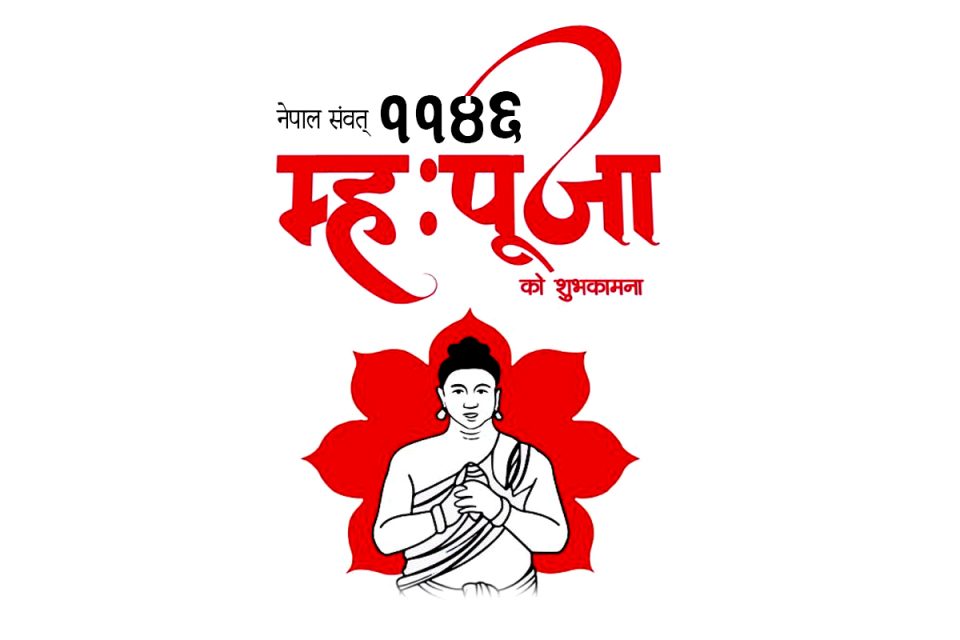
Lighting the Legacy: Celebrating Nepal Sambat 1146