
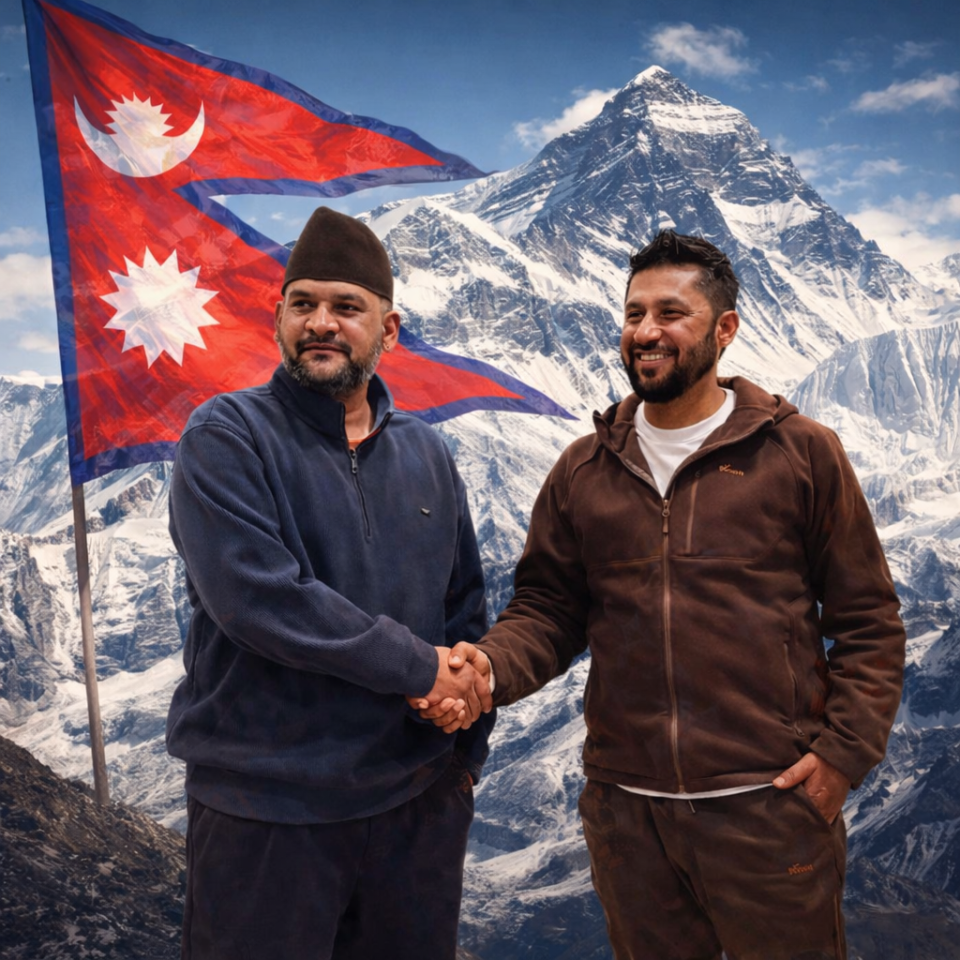
Nepal stands at a historic crossroads. After years of political uncertainty and repeated cycles of party alignments and breakdowns — familiar scenes for many Nepalis — the nation is now witnessing fresh leadership, revitalized voices, and an awakened citizenry demanding systemic change with real results. This is not just another shift in political alliances — it’s a deeper call for governance that truly serves the people, offering hope for education, health, jobs, business growth, and security.
From Protest to Political Rebirth
In September 2025, nationwide youth‑led demonstrations — driven by frustration with corruption, unemployment, and stagnant governance — rocked Nepal’s political establishment. Known as the Gen‑Z protests, these movements captured the aspirations of a generation unwilling to accept stagnation. Citizens from all walks of life rallied for accountability, transparency, and a better future. These mobilizations ultimately contributed to the resignation of then‑Prime Minister KP Sharma Oli and the establishment of an interim government under Chief Justice Sushila Karki. Nepal News
The youth movement didn’t just demand change; it inspired it — creating space for new political actors and alternative forces outside the traditional party circles.
New Leaders, New Hope
Among the most talked‑about figures in this evolving landscape are Balendra “Balen” Shah, the independent Mayor of Kathmandu, and Rabi Lamichhane, Chairman of the Rastriya Swatantra Party (RSP). Unlike typical career politicians entrenched in long‑standing party structures, both figures represent a new kind of leadership — one that connects with citizens, especially younger voters, through authenticity, direct communication, and a shared vision for change. Kathmandu Post+1
Historic Unity for the 2026 Elections
In a major political development on December 28, 2025, the Rastriya Swatantra Party and Mayor Balen Shah reached a broad, seven‑point unity agreement ahead of the scheduled House of Representatives elections on 5 March 2026. Under this pact:
- Rabi Lamichhane will continue as the central chairperson of the RSP.
- Balendra Shah will be presented as the parliamentary party leader and the party’s prime ministerial candidate in the upcoming election.
- The party will retain its name, symbol (the bell), and organizational identity.
- Both leaders commit to addressing the Gen‑Z movement’s call for good governance, accountability, and justice for injured and affected families.
- The alliance also highlights deep policy and structural reforms aimed at transforming Nepal into a middle‑income nation within a decade, emphasizing social justice and economic growth. Kathmandu Post+1
This alliance — blending fresh leadership energy with political organization — symbolizes a generational shift in Nepal’s political discourse, offering a united front that challenges the old guard and seeks to enact meaningful change. Nepali Times
Why This Matters: New Faces, Big Dreams
For decades, Nepalis have seen political parties form and fracture, with power often shifting among a small circle of traditional elites. Yet changes like Balendra Shah’s rise from independent mayor to a national political figure show that leadership rooted in public trust and performance can break old cycles. It also reflects how Nepalis — especially the youth — are ready to engage beyond slogans and into real governance. Kathmandu Post
But leadership alone is not enough. The real transformation lies in building a system that works for people every day. A strong system ensures:
- Quality education for all children and youth, preparing them for the future.
- Accessible health services that protect families and communities.
- Job opportunities and a nurturing environment for business and innovation.
- Public safety and security that citizens can rely on without fear.
- Transparent governance that earns public trust and investment.
When systems function effectively, leaders serve the people — and not the other way around.
Unity With Purpose: A Path Forward
The RSP‑Balen agreement invites other reform‑oriented forces to unite around a shared vision of governance grounded in merit, inclusion, and measurable progress. While many discussions had included various alternative political figures and groups over the past months, this latest agreement represents the most significant step toward political unity focused on citizen empowerment. Ujyaalo Nepal
It is worth noting that such unity efforts are not about eliminating diversity of thought. Instead, they aim to channel collective energy toward common goals, avoiding the pitfalls of fragmentation that have historically weakened Nepal’s political stability.
A Motivational Message for Every Nepali
To Nepalis — from the hills to the Terai, from students to professionals, from farmers to entrepreneurs — this political moment is more than strategic alliances and election campaigns. It is a wake‑up call for active citizenship. It is an affirmation that real change begins when people demand systems that uplift everyone — not just a few.
If leadership is reimagined around service rather than status, outcomes rather than optics, Nepal can finally unlock its enormous potential. The youth have spoken. New leaders are stepping forward. And now, through unity and systemic reform, the nation has an opportunity to build a stronger, fairer, and more prosperous Nepal for all.
Nepal’s future is not written by past patterns — it is being shaped by bold new actors, collective hope, and an unwavering belief that this time, governance will truly work for its people.
